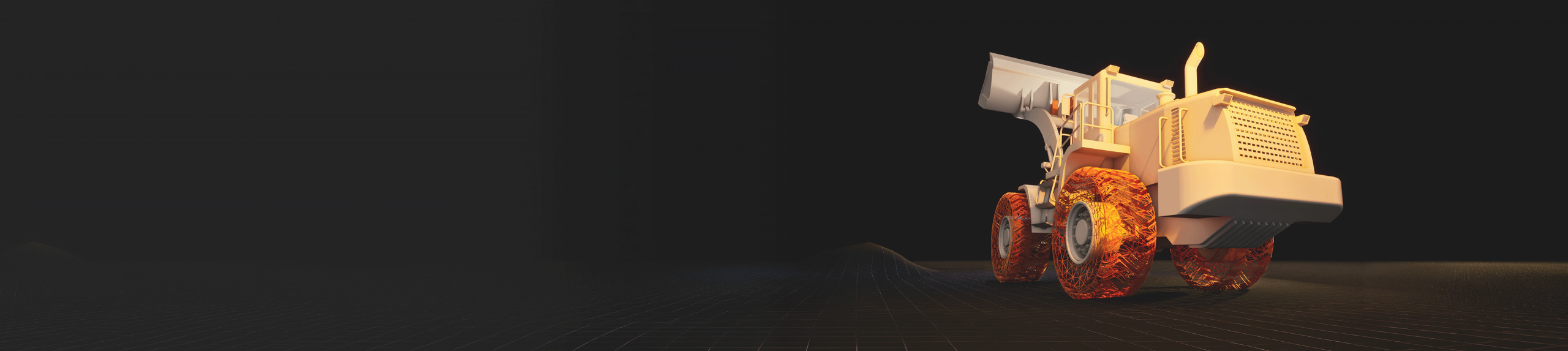
Use high-fidelity machine simulation to test control policies, from task planning to low-level controllers.
CHALLENGE:
Control Logic Needs a Realistic Machine Model to Act On
Control system development tends to start from simplified models, idealized assumptions, and software-in-the-loop environments that only partially represent the full detail and complexity of the real machine.
This becomes a weak foundation when machines operate in unstructured environments where motion, contact, loads, terrain and actuator response all shape the result.
As control systems move beyond classical control loops to full-fledged autonomy stacks, developing policies and control strategies against the behavior of the full machine becomes all the more critical.
Engineers need to test control strategies in closed loop, expose autonomy policies to realistic operating conditions, and explore failure modes before they reach physical testing.
SOLUTION:
Test Control Systems Against Realistic Machine Dynamics in Simulation
Use a simulation-ready machine model that represents machine dynamics, terrain interaction and relevant operating conditions.
Command the simulated machine from controllers, planners or autonomy software through supported integration workflows such as ROS 2, Python or other system interfaces.
Apply control inputs, observe machine response and evaluate behaviour under realistic loads, terrain conditions and environmental variation.
Test parameter changes, edge cases and control strategies in repeatable simulations before moving to physical machines.
VIDEO:
See How it Works
KEY FEATURES:
Key Capabilities for Closed-Loop Control Simulation
AGX Dynamics is powering the physics-based plant model in closed-loop control setups, simulating full-system machine dynamics, contacts, constraints, actuators and mechanical coupling in real time.
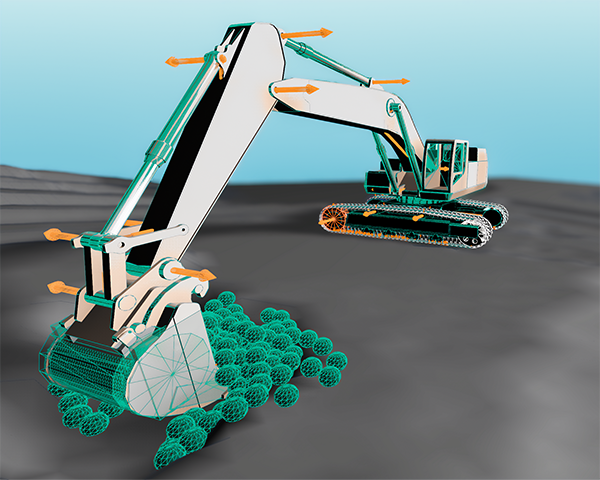
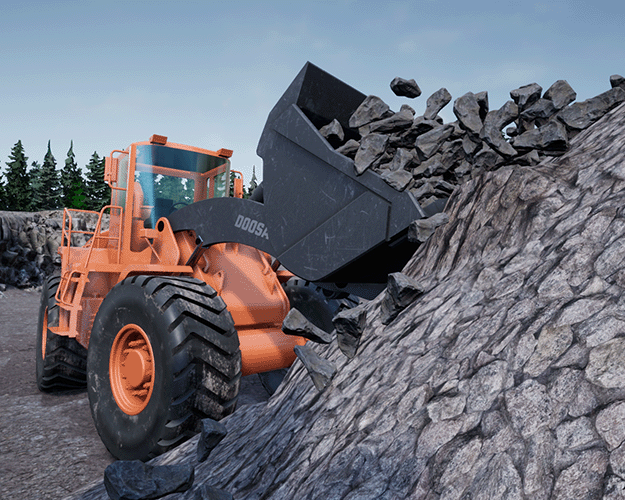
Algoryx supports simulation of interaction with terrain and materials such as soil, gravel and bulk media, allowing resistance, deformation and load transfer to influence machine behaviour in a physically realistic way.
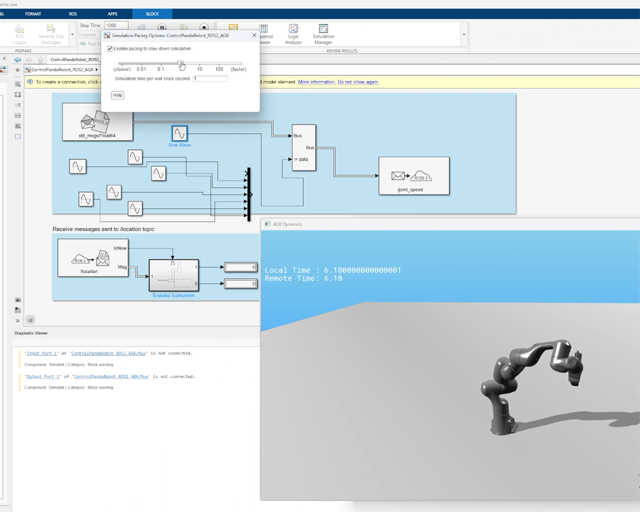
Use AGX with established control and simulation workflows, including ROS 2, Python APIs, Matlab/Simulink co-simulation and FMI export, to evaluate control logic against a physics-based machine model.
RELATED USE CASES:
Digital Twins
Create and simulate physics-based full-system models of machines and vehicles
Sensor Simulation
Understand sensor behaviour in realistic work scenarios.
FAQ:
Frequently asked questions
Ready to get in touch?
Contact our sales team and book a discovery call to explore how Algoryx can help you achieve engineering success.